
The moment two people with strong personalities, real careers, and genuine opinions share a living space, a bank account, or a five-year plan, someone is going to push. And someone is going to feel pushed. That quiet tug-of-war playing out in bedrooms, group chats, and Sunday morning conversations across America is not a new problem. But lately, it has a new, very loud face.
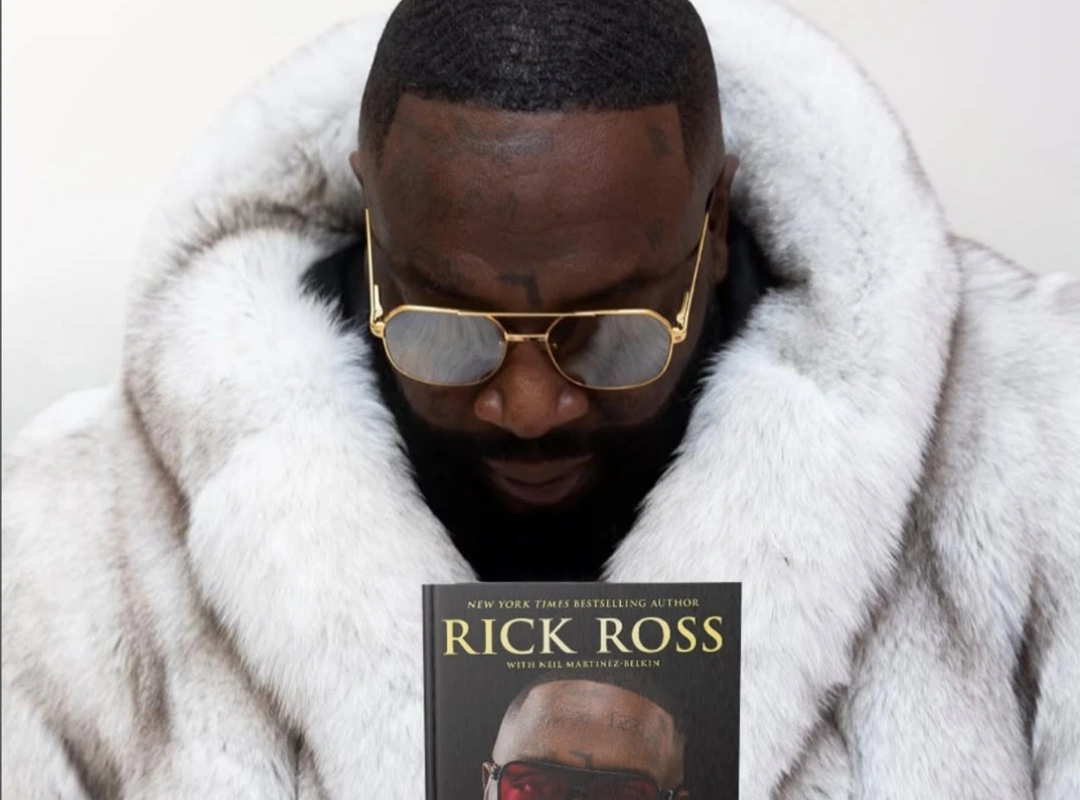
In May 2026, rapper and entrepreneur Rick Ross ignited a firestorm when he went public with his expectations for a romantic partner. His comments, shared across social media and interviews, made one thing crystal clear: in his ideal relationship, the woman stops working. Full stop. He stated that he needs a partner available at the most inconvenient moments, not clocked in at a hospital or finishing a shift. He framed financial dependency not as a constraint, but as a lifestyle upgrade, declaring himself “the career” in any relationship with a woman he provides for.
"A rich n—a gonna make you quit,” Ross said during a recent interview clip that exploded online. “I’m the career. Depend on me."
Predictably, the internet had thoughts. And those thoughts were not quiet.
But beyond the hot takes and the Twitter threads lies a much deeper conversation about power dynamics in relationships, what people actually want from a partner, and why the battle for control is one of the most common reasons otherwise solid couples fall apart.
The Ross Framework: Provision as Power
To understand the friction his words created, it helps to understand what he is actually describing. Ross is not outlining a relationship built on mutual respect. He is outlining an arrangement built on economic authority. In his model, financial provision is the ultimate trump card. If a man is wealthy enough, his partner should redirect her energy from a career to managing the household, the staff, and his schedule. He even acknowledged that he appreciates seeing a woman build something independently beforehand, calling it proof of capability. But once she is with him, he expects that chapter to close.
The Failed Date: How to Say "Thanks, But No Thanks"
What Ross is articulating, whether intentionally or not, is a very old idea dressed in new money: that financial power equals relational authority. The provider sets the terms. The dependent partner shows up.
For some women, this arrangement is genuinely appealing. Not because they lack ambition, but because the grind is exhausting and being truly cared for by a committed, capable partner is not something to be embarrassed about. That is a valid preference. The problem arrives when “I will take care of you” quietly becomes “and therefore you will do what I say.”
The Other Side: Women Who Will Not Be Managed
The response from women online was fast, pointed, and deeply personal. Across platforms, women in medicine, law, education, and business pushed back hard, and not just on Ross specifically.
“My career is not a placeholder until I find the right man. It is my identity. It is my independence. It is my exit plan if I ever need one.”-- A nurse practitioner with over 200,000 followers.
That last phrase is the one that rarely gets discussed openly: the exit plan. For many women, especially those who watched mothers or friends lose everything in a divorce after years of financial dependence, maintaining a career is not about ego. It is about survival. Surrendering income, professional networks, and career momentum is not just inconvenient. It can be nearly impossible to undo.
“I watched my mother start over at 52 with nothing because she gave up her career for a man who eventually left. I will never put myself in that position, no matter how much he makes.”-- Shared anonymously in a Reddit thread on financial independence in relationships.
Relationship therapist and author Dr. Alexandra Solomon, who studies relationship psychology and modern partnership dynamics, has written extensively about how financial imbalance creates invisible hierarchies in couples. When one partner holds all the economic power, the other partner often loses their voice long before they realize it. Decisions about where to live, when to have children, how money is spent, and even whose family gets priority during the holidays all tilt toward the person with the financial leverage.
Power Struggles Are Not Always About Money
Here is where the conversation gets more complicated. Relationship power struggles do not require a millionaire rapper to show up. They live in ordinary households between two people making modest incomes, and they show up in ways that are much harder to name.
One partner controls the social calendar. The other controls the emotional temperature of the home. One manages the finances. The other controls access to intimacy. One handles logistics. The other holds quiet veto power over where the family goes and what they do. These micro-negotiations happen constantly, and in healthy relationships, they flex and shift with the circumstances. In struggling relationships, they fortify into patterns that breed resentment.
Psychologists refer to this as relational control dynamics, and research consistently shows that couples who experience chronic imbalance in decision-making authority report lower satisfaction, higher conflict frequency, and higher rates of eventual separation. A 2023 study published in the Journal of Marriage and Family found that perceived power inequality ranked among the top three predictors of relationship dissolution, sitting alongside communication breakdown and sexual incompatibility.
The Competence Trap
One of the most ironic power dynamics in modern relationships is what some therapists call the competence trap. The more capable and self-sufficient a partner is, the more the other partner may feel quietly threatened by them. Ross actually touched on this when he said he admires a woman who builds something for herself. But he immediately followed that with the expectation that she then hand it over for him.
That tension, admiring someone’s strength while wanting to contain it, is at the heart of countless modern relationship failures. A high-achieving woman attracts a partner who says he loves her drive. Then, slowly, he becomes uncomfortable with her late nights, her travel schedule, her autonomy, her confidence. What he once celebrated, he now competes with.
“He told me he fell in love with my ambition. Three years later, he was asking me to slow down because my success was making him feel small. That’s not love. That’s insecurity wearing a suit.” -- Shared by a finance professional in a wellness podcast interview.
When Dependence Becomes the Demand
What makes Ross’s comments particularly striking is the explicit nature of the dependency he describes. In most relationships, this kind of emotional and financial dependence is expected but never stated out loud. Partners maneuver each other into positions of reliance without ever having an honest conversation about what they actually want.
A man might subtly discourage his partner from taking a promotion that requires travel. A woman might gradually reshape her partner’s social world until he becomes isolated from his own friends. Neither person would describe their behavior as controlling. But the outcome is the same: one person becomes less free, and the relationship becomes the cage.
The difference with Ross is that he said the quiet part out loud. And that is actually valuable, not because his worldview is correct, but because it forces a conversation most couples avoid until the damage is already done.
What Healthy Partnership Actually Looks Like
Genuine relationship equality does not mean both partners earn the same amount, split every chore down the middle, or have identical ambitions. It means both people feel seen, respected, and free. It means decisions are made together, not handed down. It means one person’s comfort does not consistently cost the other person their identity.
Some women do choose to step back from their careers, for children, for a partner’s demanding schedule, or simply because they want to. That choice, made freely and without coercion, is not weakness. It is a preference. The key word is choice.
What Ross described is not a choice. It is a condition of access. “I need you available” framed as romance is actually a job posting. And the salary, however generous, does not make the loss of personal autonomy free.
Licensed marriage and family therapist Nedra Tawwab, author of several widely read books on boundaries and relationships, has spoken directly about this dynamic. The goal in a healthy relationship is not for one person to have power over the other. The goal is to build something where both people feel powerful. That distinction, subtle as it sounds, is the entire ballgame.
The Real Reason Power Struggles End Relationships
At its core, a power struggle in a relationship is a distress signal. It is two people trying to feel safe in the same space and using control as the mechanism because vulnerability feels too dangerous. When one partner demands financial dominance, social control, or emotional authority, they are often managing their own unspoken fear of abandonment, inadequacy, or irrelevance.
And when the other partner resists, matches that energy, or quietly begins to disappear from the relationship, what you get is not a partnership. What you get is a negotiation that never ends and never resolves.
The couples who make it are not the ones who never fight for control. They are the ones who recognize the fight early, name it honestly, and choose to put the relationship above the need to win.
Rick Ross wants a woman who is available on demand. Millions of independent women want a partner who does not need to own them to love them. Somewhere in that tension is the actual work of building something real. And that work, unlike any career, cannot be outsourced to hired help.