
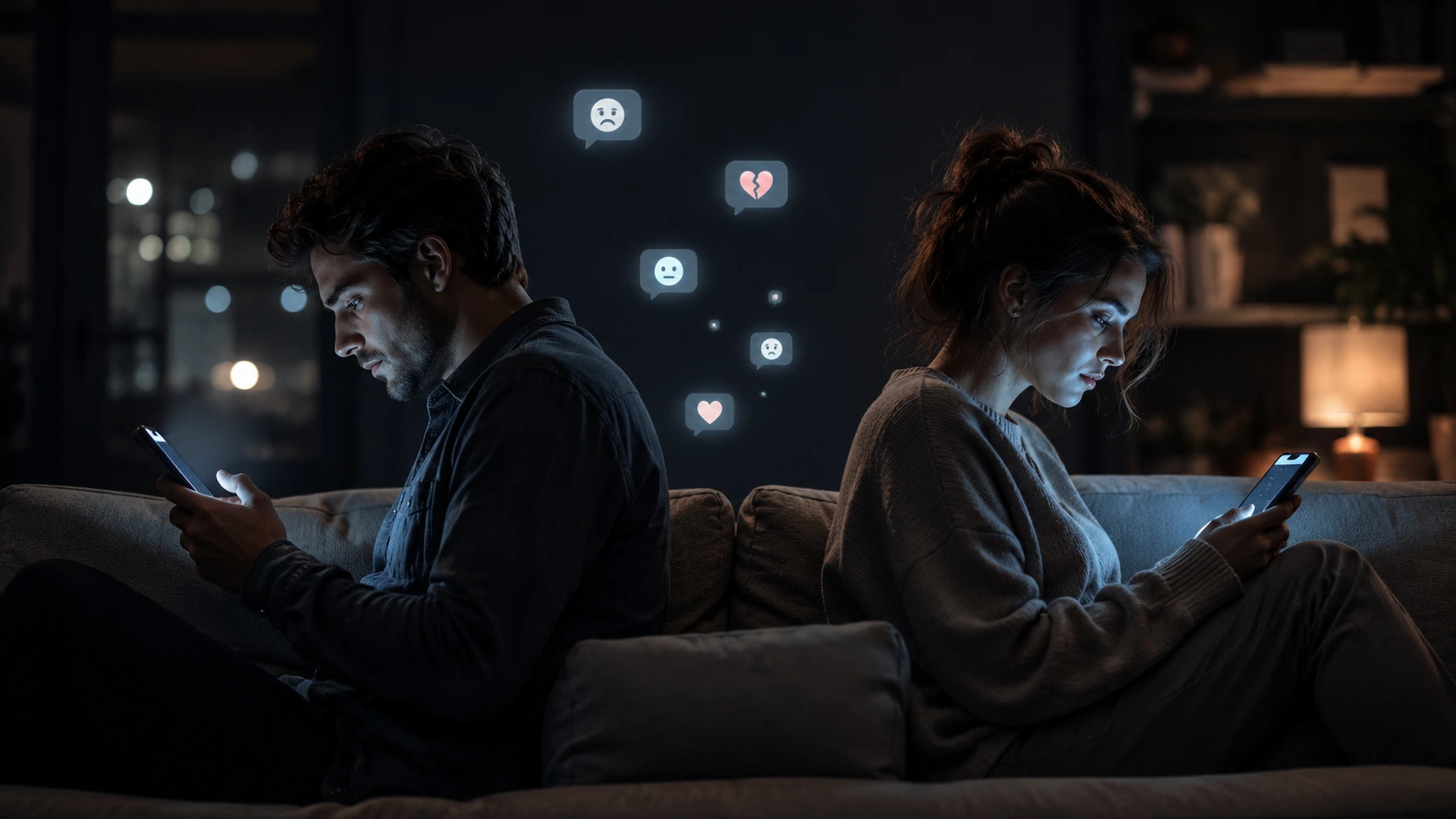
Dating today can feel like wandering through a maze built out of glowing screens and ambiguous notifications. The cues that used to signal attraction, a held glance across a room, a smile, a number scribbled on a napkin, have been replaced by a dialect of emojis, double texts, and read receipts that leave you wondering whether you somehow missed the orientation class. If you have ever stared at a single thumbs-up reply and tried to reverse-engineer what it actually meant, congratulations. You are fluent in the strange new language of mixed signals.
Here is the short answer for anyone who wants it up top: the confusion you feel is real, it is widespread, and most of the time it is not a personal failing. It is the predictable result of trying to communicate human emotion through a medium that strips most of the emotion out. The good news is that once you understand the mechanics, you stop blaming yourself and start dating with a lot more clarity.
Somewhere along the way, emojis became shorthand for affection, sarcasm, flirtation, and everything in between. They are tiny symbols carrying enormous emotional weight, and the trouble is that everyone reads them slightly differently. Your heart-eyes are their polite acknowledgment. Their period at the end of a sentence reads, to you, like a slammed door.
This is not just in your head. Hinge's research team has spent years studying what it calls digital body language, the nonverbal cues we send through emojis, punctuation, message length, and response time. According to the dating app's D.A.T.E. report covered by Fortune, two out of three daters use response time alone to decide whether someone is serious, and three out of four treat who texts first as a clear sign of interest. We are all running constant background calculations on data that was never designed to carry that much meaning.
If you want to know why two people can text each other in completely different emotional fonts, attachment psychology has answers. A 2024 study by Simon Dubé and colleagues at the Kinsey Institute, published in the open-access journal PLOS ONE, surveyed 320 adults and found that people higher in emotional intelligence tended to use emojis more freely with friends, treating them as tools to convey warmth and nuance. Dubé described emojis as "a way to convey meaning and communicate more effectively," not just decoration.
The flip side is where the heartbreak hides. The same study found that people with an avoidant attachment style, those who prize independence and tend to feel uneasy with closeness, use noticeably fewer emojis with dating and romantic partners. So that person who answers in clipped, emoji-free replies may not be cold or uninterested. They may simply be wired to keep emotional temperature low. Read it as rejection and you might walk away from someone who actually liked you.
This is exactly where things tip into something that feels like digital gaslighting. Not the deliberate, manipulative kind, but the everyday version where your own gut read battles a wall of silence, and you start second-guessing whether you imagined the connection at all. You did not imagine it. You just hit the limits of a medium that cannot show you a face.
Modern dating has spawned an entire glossary for getting hurt. Ghosting is the abrupt disappearance with no explanation. Breadcrumbing is the slow drip of just-enough attention to keep you interested with no intention of following through. Then there is orbiting, where someone exits your conversations but lingers in your story views, watching without engaging. These are not quirks of bad luck. They are documented patterns that have turned romance into something closer to a game of strategy and survival, and they thrive precisely because screens make it so easy to fade out rather than say the hard thing.
The platforms themselves bear some of the responsibility. A systematic review of online dating research by Bonilla-Zorita, Griffiths, and Kuss found that traits like sensation-seeking, sexual permissiveness, and neuroticism are associated with heavier use of dating services. Combine those tendencies with an interface built around swiping, ranking, and endless choice, and you get an environment that quietly nudges people toward consuming profiles rather than connecting with humans. When the design rewards the next swipe over the current conversation, mixed signals are not a bug. They are practically the business model.
If all of this sounds draining, the data agrees. Surveys across 2024 and 2025 found that roughly four in five Gen Z and Millennial users describe themselves as burned out by the cycle of swiping, matching, and ghosting. In the United Kingdom alone, well over a million people walked away from dating apps in a single year. The constant decoding of signals becomes a second job, the same kind of invisible exhaustion that builds in overextended households where the emotional labor never clocks out.
Out of that fatigue, something hopeful is emerging. Daters, especially younger ones, are demanding clearer intentions early, a habit the apps have started branding as "clear-coding." Others are abandoning the swipe entirely and returning to in-person meeting, from run clubs to hobby groups to simply making eye contact across a coffee shop. The correction is real, and it points in one direction: people are tired of guessing, and they are rewarding clarity.
Adapting to the digital age does not mean surrendering your values to the algorithm. It means bringing your real self into new tools. Use emojis on purpose, with a clear sense of your own intent and a little empathy for how the other person might read them. Match your communication to your meaning instead of performing a persona. And when a connection feels promising, move it off the app and into a real conversation before the ambiguity does its quiet damage.
It also means watching for the moment when mixed signals stop being a communication gap and start becoming a control dynamic. When one person keeps the other perpetually guessing, that imbalance can curdle into the kind of quiet power struggle that derails so many modern relationships. Clarity is not just convenient. It is a form of respect, and its absence is information worth paying attention to.
The medium has changed, but the core of human connection has not. Empathy, honesty, active listening, and genuine interest still carry the whole thing. John Legend once said that "soul is about authenticity," about finding what is real and pure, and the same is true of dating. He has also pointed out that even as the world around us changes, the way human beings love each other stays timeless, still built on trust, honesty, and commitment. An authentic connection never came from a perfectly timed text. It came from a willingness to be real.
So set your boundaries, communicate with intention, and do not be afraid to pivot from the screen to a face whenever the timing is right. Stay true to yourself rather than getting swept along by the current. And remember the one thing all the emojis and read receipts can make you forget: behind every screen is a human being, just as complicated and just as hungry for real connection as you are.